
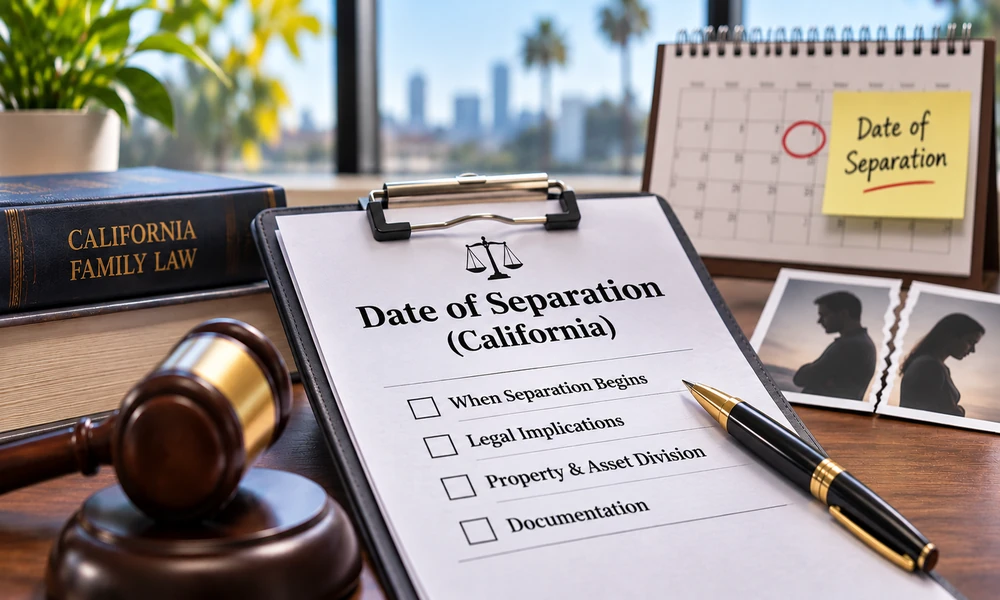
The date of separation in California is the point when a marriage ends for property purposes. It marks when community property stops accumulating. Earnings and most property acquired after that date are generally each spouse’s separate property.
Family Code section 70 defines it as the date a complete and final break in the marital relationship occurred. Two things are required. One spouse must have expressed to the other the intent to end the marriage, and that spouse’s conduct must be consistent with that intent. Courts look at all relevant evidence, including moving out, separating finances, telling family and friends, and how the spouses acted toward each other.
The date matters for several reasons. Income, bonuses and retirement contributions earned after separation usually belong to the earner alone. Debts incurred after separation are generally the responsibility of the spouse who incurred them. The length of the marriage, measured from marriage to separation, affects spousal support duration. A marriage of ten years or more is presumed to be a marriage of long duration.
Disputes over the date are common when one spouse is about to receive a large bonus, stock grant or inheritance, or when a marriage is close to the ten-year mark. Couples who keep living in the same house can still be separated, but the evidence needs to show the break was complete.
Law & Mediation Offices of Dan DeSario & Associates, a Beverly Hills family law firm, advises spouses to document the decision to separate in writing and to keep finances distinct from that point. Clear records reduce one of the most avoidable disputes in a divorce.
Attorney advertising. This article is general information about California family law and is not legal advice. Every case is different.
